Flashback for Sega Master System
A downloadable game
Flashback → Sega Master System
Github repo: https://github.com/haroldo-ok/flashback-sms
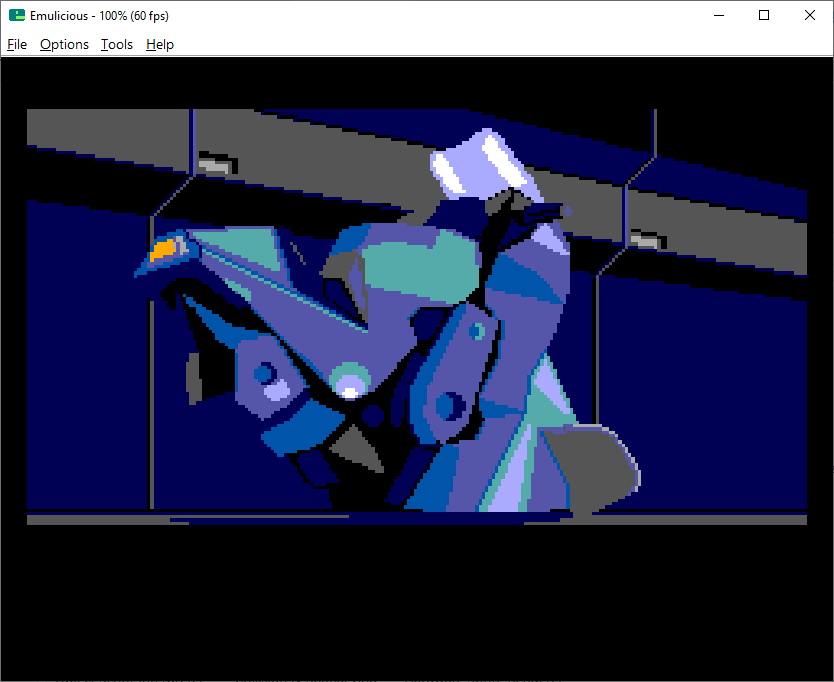
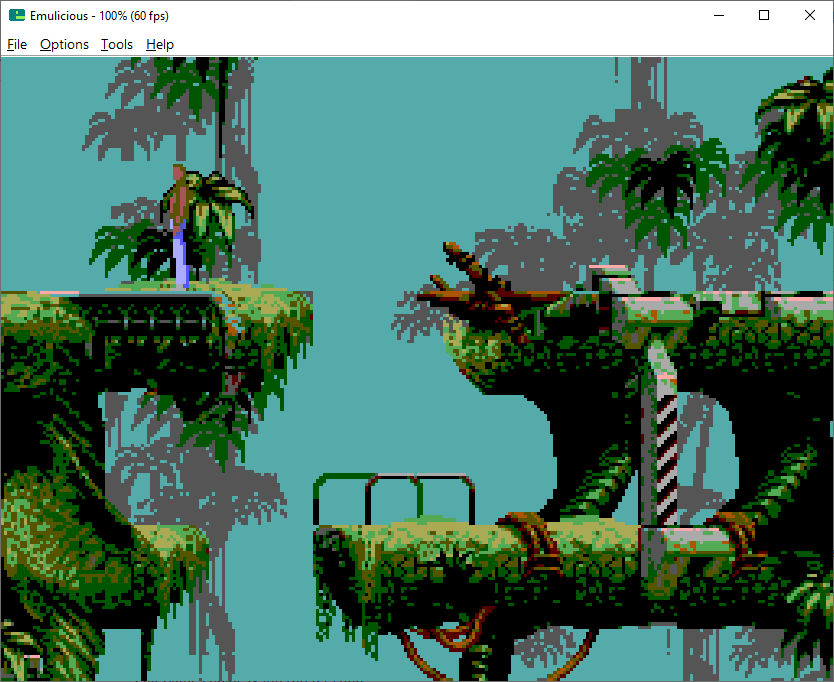
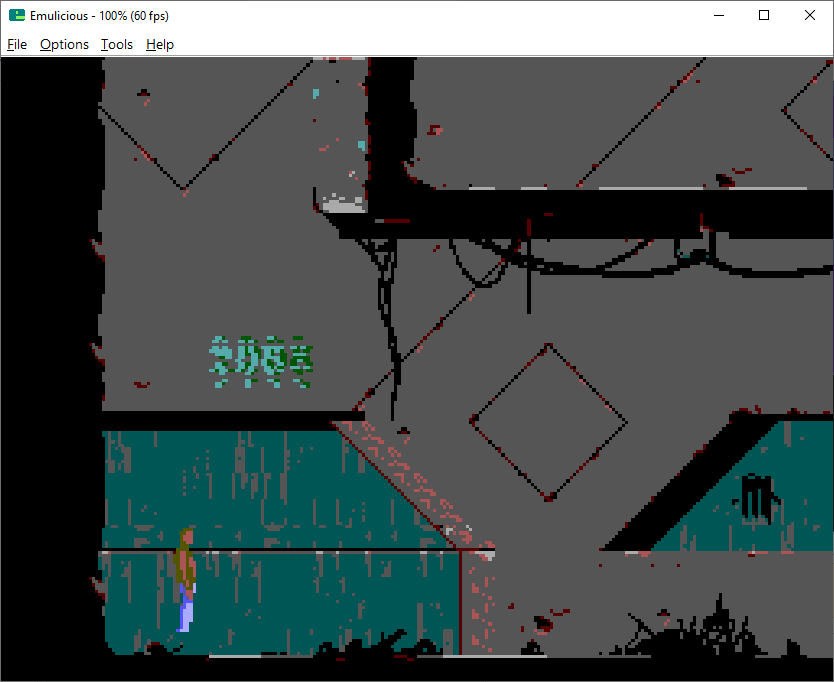
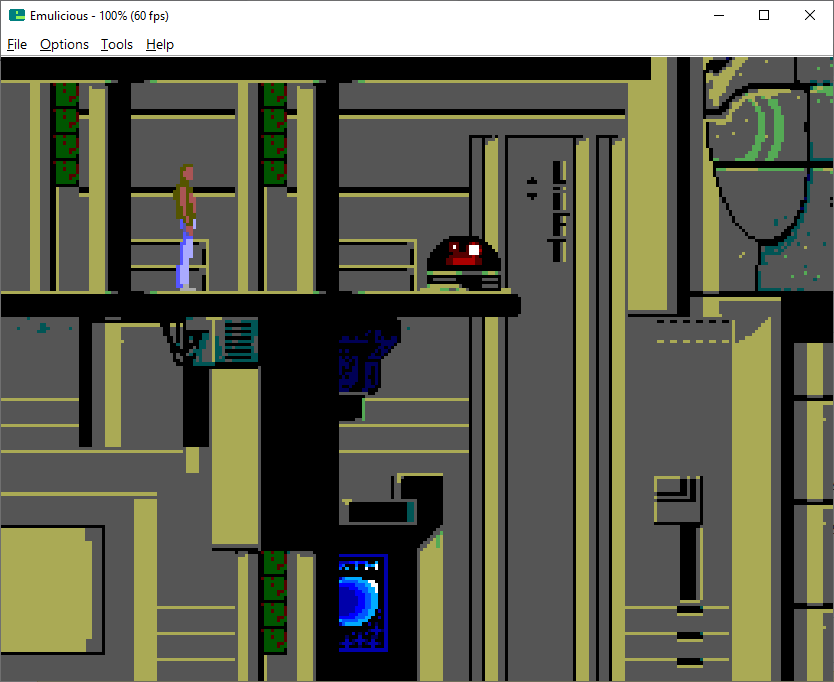
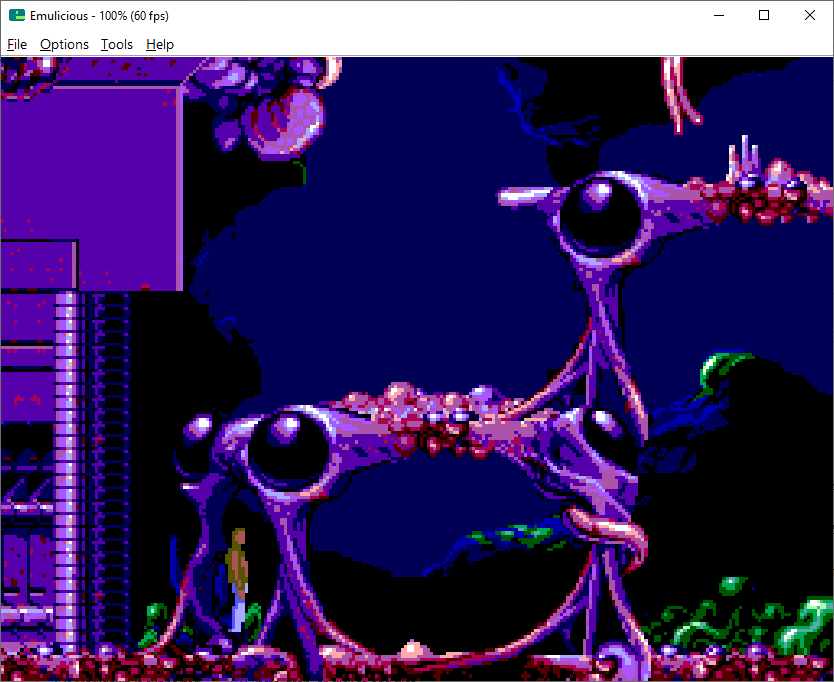
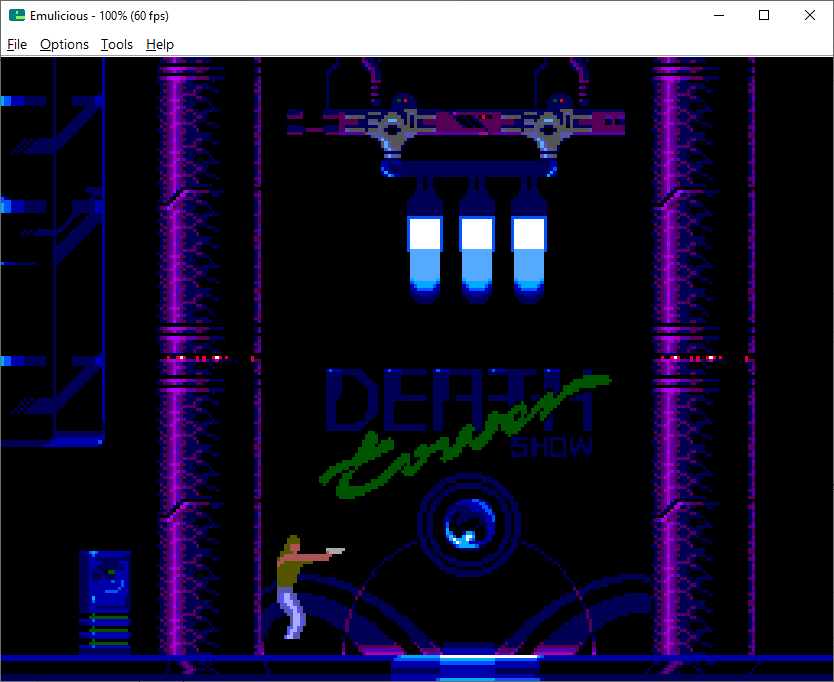
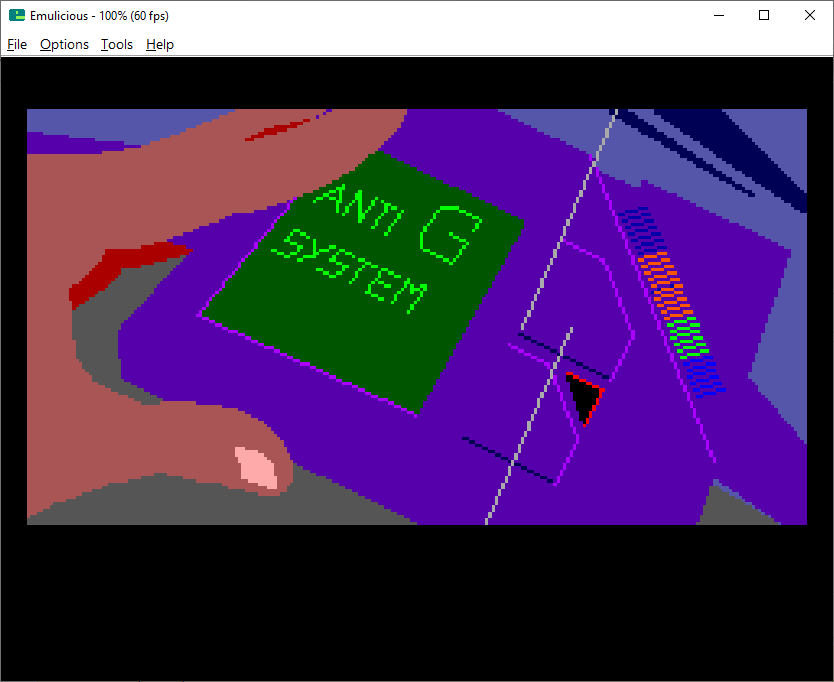
A port of the DOS version of Flashback (Delphine Software, 1992) to the Sega Master System: all five levels in one 4 MB cartridge image, with the original's cutscenes, rooms, sprites, game logic, music and sound effects converted from the game's own data files.
The game logic is a port of the open-source REminiscence engine's object-script interpreter to the Z80, checked frame by frame against the original engine running on the same inputs.
The game's data is not included. You need your own copy of the DOS game; the build reads its files and produces the ROM.
Status
Playable, with known gaps:
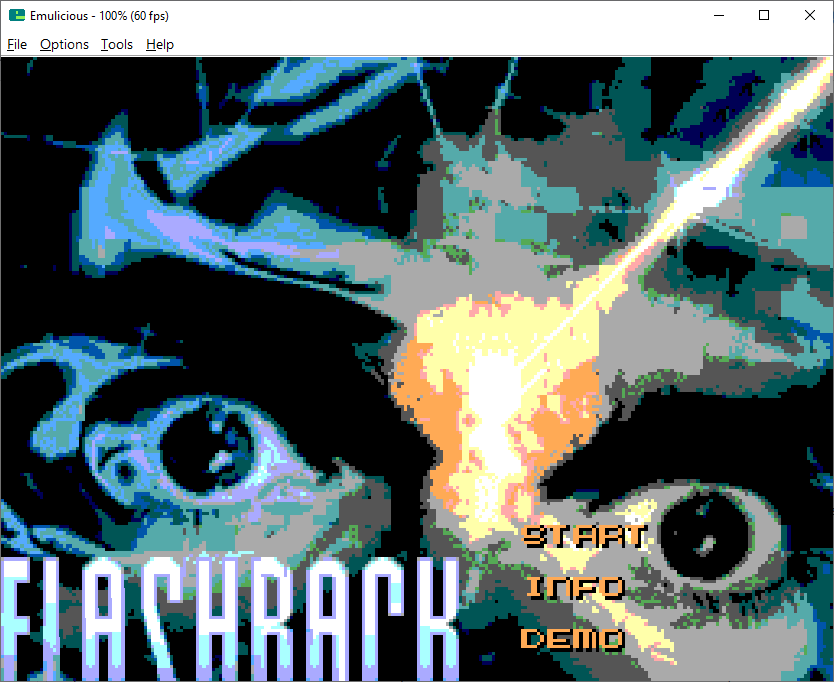
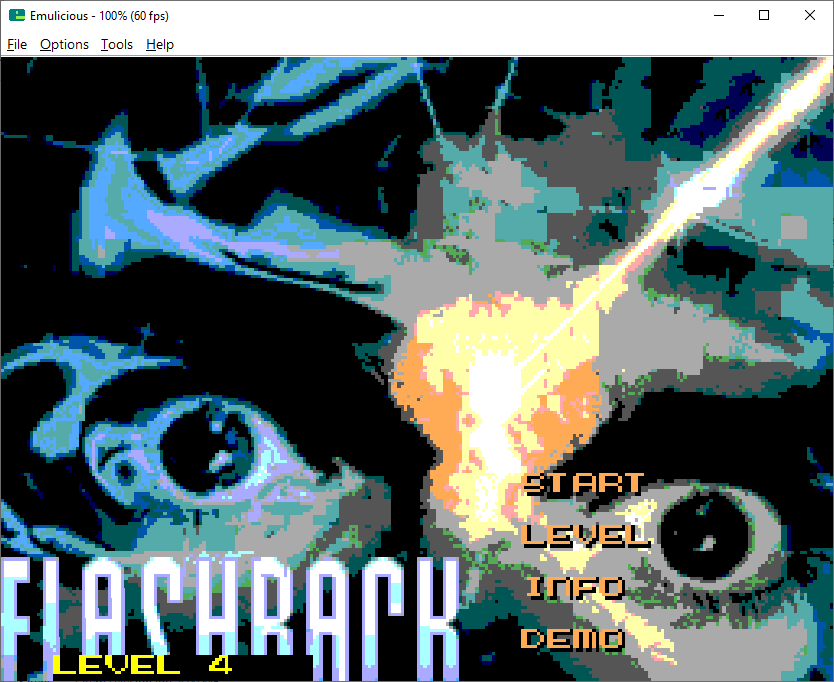
- All five levels, chosen from a level select on the title screen.
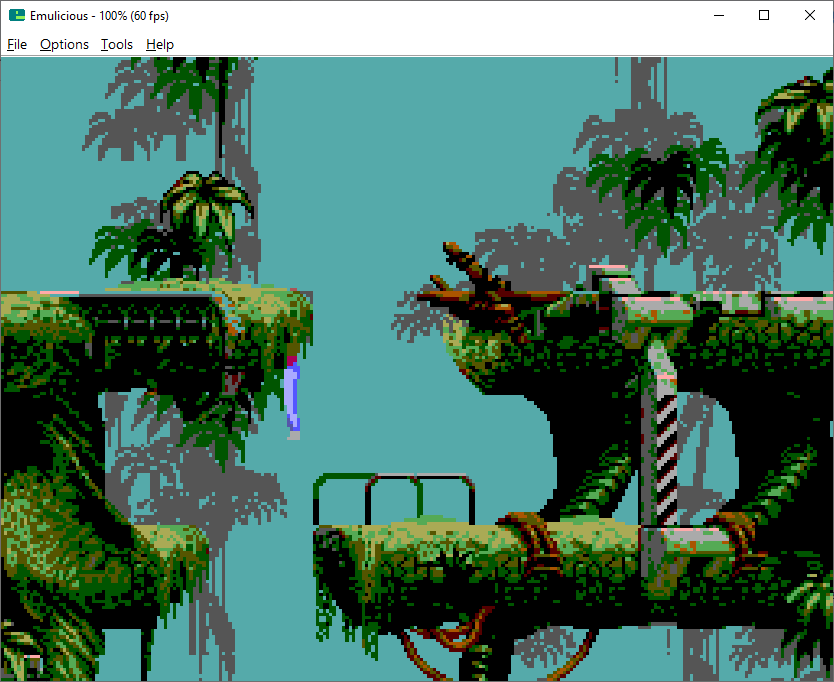
- Conrad walks, runs, jumps, draws and fires the gun, picks up and uses items, and rides lifts; monsters and level machinery run on the ported scripts.
- 98–99 % of the script steps in every level are ported opcodes. An unported step is skipped, so a script keeps running, but the machinery that relies on it may misbehave.
- The simulation runs at roughly a third of the original's speed (see Performance). It is correct but slow.
- The intro is the logos only, and the mission briefings and the ending are not in the ROM: they do not fit (see What fits).
Controls
| D-pad | walk; up/down climb, crouch, take ledges |
| Button 1 | run while moving; button 1 + up jumps (from a standstill or after running); button 1 + up/down rides a lift while standing on it |
| Button 2 | action: draw and fire the gun, pick up, operate |
| Buttons 1 + 2 | use the current inventory item |
| PAUSE | open the inventory |
In the inventory: left/right choose an item, button 2 makes it the current item and returns, button 1 or PAUSE returns, both buttons quit to the title screen. On the title screen, up/down choose the level and any button starts it; button 1 skips a cutscene.
The engine reads the pad through its own pge_getInput, which never sees a diagonal: with both axes held it keeps the last purely horizontal direction. So up plus a direction keeps you running, as in the original.
What's in the ROM
| Cutscenes | 27 clips: the logos, the level intros, and the short in-game clips the level scripts can request (item pickups, lifts, teleports, taxis) |
| Rooms | 193 rooms from the five levels' maps, plus the title screen |
| Level data | object tables, script records and animation data for all seven level parts |
| Sprites | six sets — Conrad, the four monster types, and the level objects — 3,255 animation frames sharing 23,068 8×8 tiles |
| Sound | 11 music tracks and 56 sound effects |
| Item display | 30 icons, 27 font glyphs and 128 level texts |
| Code | 32,079 of 32,768 bytes; 7,853 of 8,192 bytes of RAM |
| ROM | 4,096 KB of 4,096 — completely full |
Building
Needs SDCC ≥ 4.2 and devkitSMS (~/.devkitsms, with ~/.devkitsms/bin on the path), a C++ compiler for the extractor, and Python 3 with numpy and Pillow.
tools/rebuild_full.sh /path/to/flashback/data # extract and convert everything make pack # pack the ROM data make # -> flashback.sms (4 MB) make check # the verification gate
tools/rebuild_full.sh runs the extractor on your copy of the game and every converter after it; it takes a while (the cutscene captures are large). Once gen/ is populated, make pack && make rebuilds the ROM in seconds.
make check builds a separate test ROM — with the verification data in and the item display out, since the cartridge cannot hold both — runs it in the bundled emulator, compares the results with the reference decoders and the original engine, then rebuilds the shipping ROM.
How it works
Extraction
tools/fbdump links the REminiscence engine (GPL) headless, with hooks on every sprite blit and every drawn frame. It captures what the original engine renders — cutscene frames, rooms, every sprite of every animation, the title screen, menu text — and dumps level tables, sound samples and palettes, so the converters never guess at a format. The same hooks trace the engine's object state frame by frame, which is the oracle for the logic port.
Graphics
Everything is tiled and losslessly compressed (tools/tilepack.py): a tile keeps only its non-constant bit-planes, a plane may be the complement of another, and the Z80 rebuilds the exact tile before uploading it. Flat-shaded artwork compresses well — cutscene tiles shrink by 46 %, rooms by 31 % and sprites by 33 % — and this is the main reason five levels fit. The expanders are in assembly: in C they took over half the CPU at cutscene cuts.
- Cutscenes (
tools/fmvenc.py,src/fmv.c) are streams of tile uploads and tile-map writes over a shared tile dictionary, with VRAM used as a cache. - Rooms (
tools/roomconv.py,src/room.c) are a tile map plus the dictionary ids of their tiles, loaded with the display off. - Sprites (
tools/animconv.py,tools/sprconv.py,src/sim.c) are rendered from the simulated state: each object's animation number, mirror flag and sprite set select a list of 8×16 hardware sprites, which stream through a 22-slot cache in VRAM. - Collectibles are drawn by the original over scenery; an SMS sprite cannot override a background tile's priority, so the priority bit is cleared on the cells under each item when a room loads.
Game logic
src/logic.c ports the frame loop, the object-script interpreter and its opcodes, the message queue, the collision grid and slots, room tracking, inventory lists, hit detection (melee and gun) and the animation-driven sounds. src/pge.c builds each level's live object table exactly as the engine does.
The SMS has 8 KB of RAM, so the live object table holds 255 objects in a narrowed record, with the inventory links kept in a small side table. Level 2 has 256 objects; its 256th is the level's controller object, which other scripts rely on, so it moves into the slot of an object that is never loaded at this difficulty.
Sound
The PSG has three square voices and one noise voice, while the original has MIDI music and sampled effects, so both are re-created:
- Music (
tools/midiconv.py,src/psg.c): each MIDI score is reduced to three voices — the loudest three sounding notes, each note keeping the voice it already has — with percussion on the noise voice, stored as a 60 Hz stream of ready-made PSG writes. Cutscenes play the score the game assigns them. - Effects (
tools/sfxconv.py): each sample's noisiness, pitch and loudness envelope become a tone or noise burst with the same shape in time. Most effects are triggered by animations (a sound id in each animation's header), as in the original.
Item display and inventory
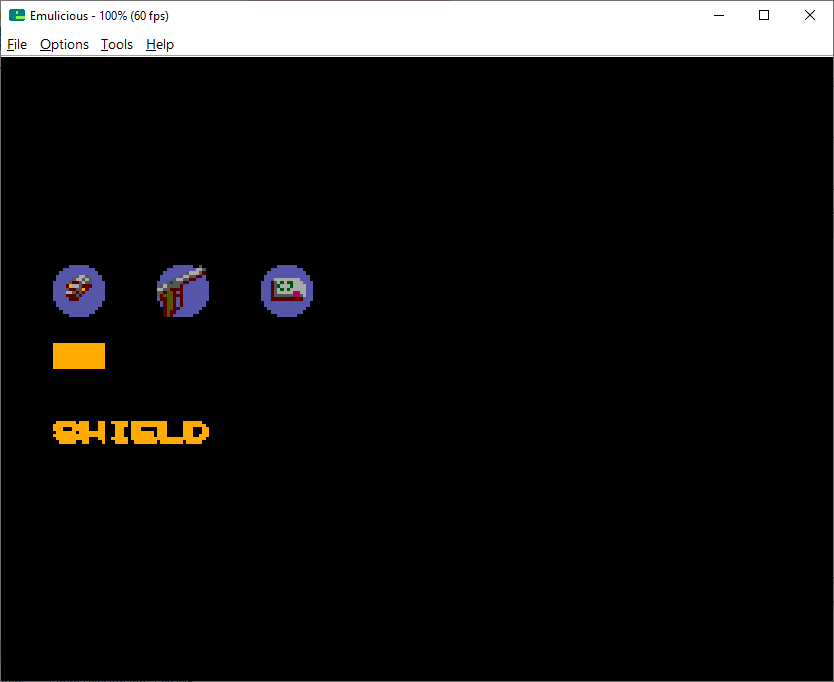
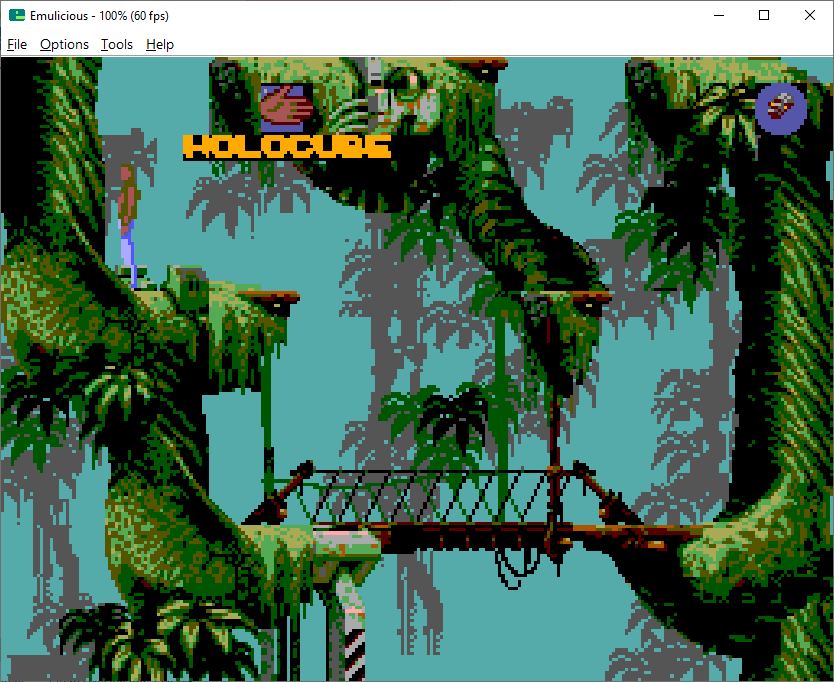
tools/hudconv.py reads the icons, the menu font and every level's texts from global.icn, fb_txt.fnt and the .tbn files. Standing on an item shows its icon and name where the original draws them, the current item's icon sits at the top right, and PAUSE opens the inventory (src/hud.c). They use the sprite palette, which background cells can select, so they look right over any room.
Bank layout
Everything gameplay needs is packed into the lower banks and the cutscenes, the bulkiest data and the only part the game can do without, go above them.
Verification
- Against the original engine: the recorded demo's first 504 frames on level 1 reproduce the engine's state for every object, every frame. The level object tables match the engine for all seven parts.
- Scripted runs:
fbdump DATA script OUT LEVEL KEYFILEplays a level from its own start through the original engine with a chosen key sequence (one mask byte per frame), and the port checks itself against that trace withmkdata.py pack ... --logic TRACE --logic-level Nandmake SELF_TEST=1. This verified the level-2 gun draw (170 frames) and the level-4 lift ride (315 frames). - Against reference decoders: sampled cutscene frames and the title screen match pixel for pixel.
- Emulator (
tools/smstest): a headless SMS emulator with the 8-sprites- per-line limit, background priority, PAUSE, sound-chip logging (psglog), a cycle-sampling profiler (profstart/profstop/profdump), and RAM that powers on with garbage rather than zeros.
Performance
A simulated frame takes about 6.6 frames of CPU against a budget of 2, so the game runs at roughly a third of full speed. Profiling (tools/smstest) puts most of the cost in the interpreter's collision preparation, script walk and animation setup, spread across SDCC's stack-frame addressing rather than any one hot loop. The wins so far came from doing less work, such as walking the room's own object list instead of every object, not from tightening code.
What fits, and what does not
The SMS mapper tops out at 4 MB and the ROM is full. Left out: the second and third parts of the intro and level 4's long approach cutscene (the three longest clips), the mission briefings and the ending, and 15 of the 26 music tracks (only those the included cutscenes can request are packed). Six of the cutscenes the level scripts can ask for were also missing from the source data used. The code area is also nearly full (97.9 %).
Lessons worth keeping
- Check against the original, don't reason about it. Every stubborn bug — the level-2 gun, the lift, the missing sound effects — fell to running the original engine on the same inputs and finding the first frame where the port differs. Reasoning from symptoms produced fixes that broke other things.
- Feed test inputs the way the game does. Driving the engine through its demo-playback path changed the current room while the level loaded, so the start room's objects were never activated, and the lift could not be ridden in testing even though it worked in the game.
- Indexes that are fine on level 1 are not proof. Several bugs were per-level data addressed with a pinned index, or tile bases that agreed only because level 1's rooms all hit the same cap.
- A sticky "unsupported" flag looks exactly like a freeze. An unported opcode once halted every object for the rest of the session, with the screen intact.
- Measure CPU time, don't infer it. Profiling by disabling parts of the frame changes what the game simulates, so the timing means nothing.
- Edits that silently miss are dangerous. A slot-count change that never applied let sprite uploads overwrite the item icon; scripted edits now fail loudly when their target is absent.
Known gaps
- Simulation speed, as above.
- The remaining unported opcodes: mostly level-specific machinery.
- The collision-grid overlay holds 24 modified spans and the collision slots 160 (the engine allows more); a busy level could exceed them and diverge.
- PAL (50 Hz) consoles are untested; cutscenes adjust, gameplay may run slow.
- Not tested on real hardware. It has been played in PicoDrive and in the bundled emulator.
Licence
tools/fbdump links the REminiscence engine, which is GPL-licensed, and the Z80 interpreter in src/logic.c is a port of that engine's code, so the GPL's terms are worth checking before distributing either. Flashback and its data belong to their rights holders and are not distributed here; a ROM built from them contains the game's converted graphics, levels and sound.
Download
Click download now to get access to the following files:
Development log
- v0.0.7: Flashback SMS: run the game logic ~2.2× faster, fix scrolling, sprite a...2 days ago
- v0.0.6: Implement HUD and the inventory.3 days ago
- v0.0.5: Fix elevators and sound effects.7 days ago
- v0.0.4: Add support for music.10 days ago
- v0.0.3: add all the 5 levels from the full version.11 days ago
- v0.0.2: Flashback for Sega Master System: port again using Claude Code.12 days ago
Comments
Log in with itch.io to leave a comment.
While this is great the game can be played onn the Sega Genesis and the Sega CD already and they are not bad ports.
How about porting The Comodore 64 version of Wizard and the Princess to the Sega Master System? It is considered a prequel to King Quest I and the IBM PC version is really bad. Meanwhile the Comodore 64 version is considered the best version of the game.
I guess I could give it a try